
Backyard Pool Maintenance for a Clean Safe and Enjoyable Pool
A backyard swimming pool is one of the most valuable additions to any property. It creates a space for relaxation, entertainment, exercise, and memorable moments with family and friends. However, enjoying a pool year-round requires consistent care and attention. Effective backyard pool maintenance is essential for keeping water clean, protecting equipment, and ensuring a safe swimming environment.
Many pool owners underestimate the importance of routine maintenance until problems arise. Cloudy water, algae growth, damaged equipment, and chemical imbalances can quickly turn a beautiful pool into a costly headache. Fortunately, following a structured maintenance routine can help prevent these issues while extending the life of the pool and its components.
As highlighted by Balanced Poolz, proactive pool care is one of the most effective ways to maintain water quality, improve equipment efficiency, and create a safer swimming experience. This guide explores the key aspects of pool care, practical maintenance strategies, and expert tips to help pool owners maintain sparkling water and optimal performance throughout the swimming season.
Why Backyard Pool Maintenance Is Essential
Consistent backyard pool maintenance goes beyond aesthetics. While clear blue water certainly enhances a pool’s appearance, proper maintenance directly impacts swimmer safety, water quality, and operational efficiency.
Pool water is constantly exposed to contaminants such as dust, leaves, pollen, insects, sunscreen, body oils, and other debris. Without regular cleaning and chemical balancing, these contaminants can create an environment where bacteria and algae thrive.
Routine maintenance helps:
- Maintain healthy water quality
- Prevent algae and bacterial growth
- Protect pool surfaces from damage
- Improve equipment efficiency
- Reduce repair and replacement costs
- Extend the lifespan of pool systems
- Enhance the overall swimming experience
Investing time in preventative care often saves significant money compared to addressing major repairs or water treatment issues later.
Understanding Pool Water Chemistry
One of the most important aspects of backyard pool maintenance is maintaining balanced water chemistry. Proper chemical levels help keep water sanitary while protecting swimmers and pool equipment.
pH Balance
The pH level measures how acidic or alkaline the pool water is. Most swimming pools perform best when pH levels remain between 7.2 and 7.8.
When pH levels become too high:
- Chlorine becomes less effective
- Water may appear cloudy
- Scale can form on surfaces and equipment
When pH levels become too low:
- Water may irritate eyes and skin
- Pool surfaces can corrode
- Equipment may experience premature wear
Regular testing helps ensure pH remains within the recommended range.
Chlorine Levels
Chlorine serves as the primary sanitizer in most pools. It eliminates harmful bacteria, viruses, and other contaminants.
Maintaining appropriate chlorine levels helps:
- Keep water safe for swimmers
- Prevent algae formation
- Reduce the spread of microorganisms
Consistent monitoring ensures chlorine remains effective without becoming excessive.
Total Alkalinity
Total alkalinity acts as a stabilizer for pH levels. When alkalinity falls outside recommended ranges, pH can fluctuate rapidly, making water balancing more difficult.
Maintaining proper alkalinity contributes to more stable and manageable pool chemistry.
Calcium Hardness
Calcium hardness measures the concentration of dissolved calcium in the water.
Low calcium levels may cause:
- Surface deterioration
- Etching of pool finishes
High calcium levels may result in:
- Scale buildup
- Reduced equipment efficiency
Balanced calcium hardness protects both pool surfaces and mechanical systems.
Developing a Regular Pool Cleaning Routine
Cleaning is a fundamental component of effective backyard pool maintenance. A structured cleaning schedule helps prevent debris accumulation and supports healthy water conditions.
Skimming the Water Surface
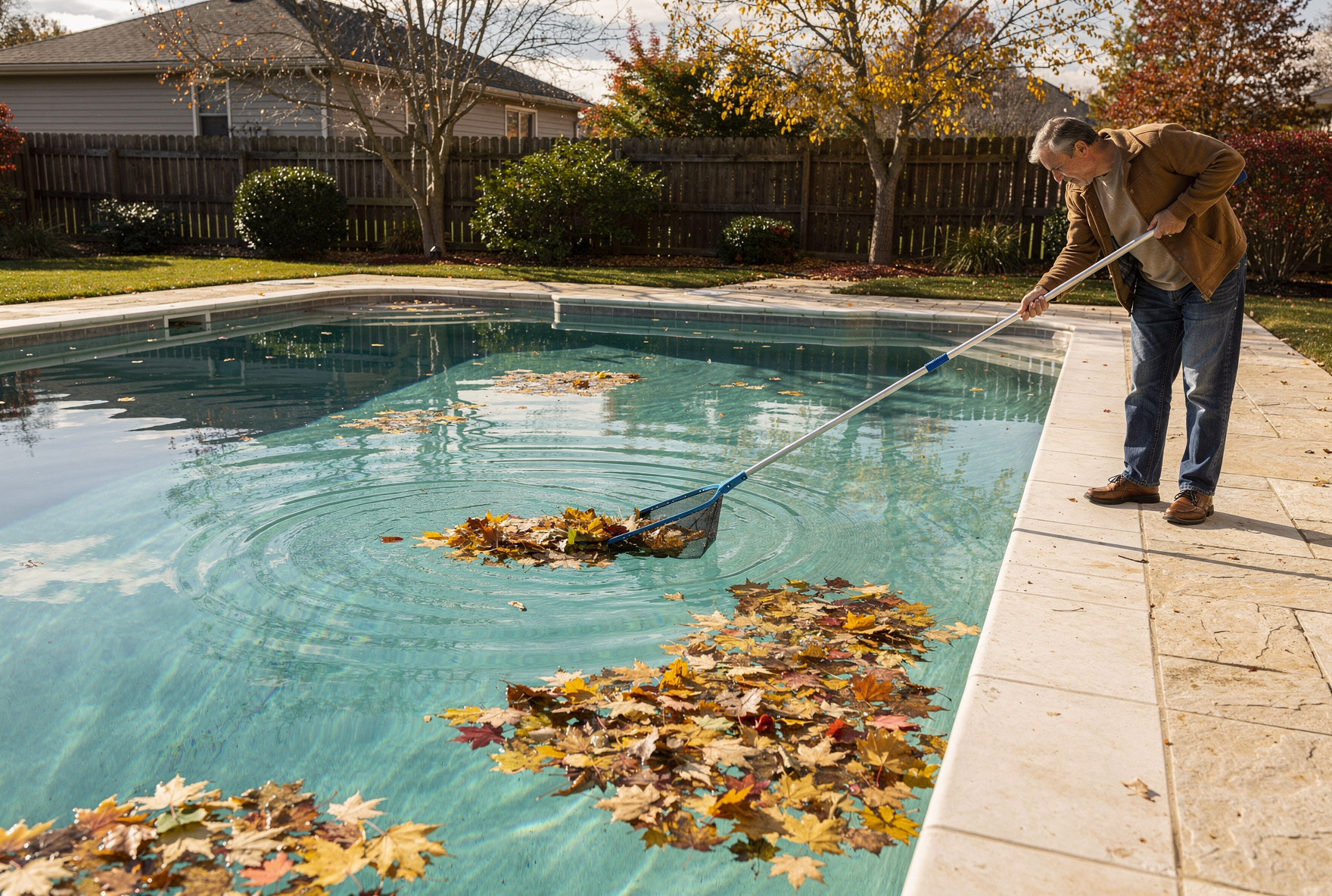
Leaves, insects, and floating debris should be removed regularly using a skimmer net.
Benefits of routine skimming include:
- Improved water circulation
- Reduced strain on filtration systems
- Better overall water appearance
Daily skimming can significantly reduce maintenance demands later.
Brushing Pool Walls and Surfaces
Pool walls, steps, and corners can accumulate algae, dirt, and mineral deposits over time.
Brushing helps:
- Prevent algae growth
- Remove buildup before it becomes difficult to clean
- Maintain the appearance of pool surfaces
Different pool materials may require specific brush types to prevent damage.
Vacuuming the Pool Floor
Debris often settles at the bottom of the pool, where it may not be removed through skimming alone.
Vacuuming helps eliminate:
- Dirt
- Sand
- Organic material
- Fine debris
Regular vacuuming improves water clarity and reduces contamination.
Emptying Baskets and Traps
Skimmer baskets and pump baskets collect debris before it reaches filtration equipment.
Cleaning these components regularly:
- Promotes efficient water flow
- Reduces equipment strain
- Supports filtration performance
Ignoring basket maintenance can lead to circulation problems and increased wear on pool systems.
The Importance of Pool Filtration Systems
A properly functioning filtration system is the backbone of successful backyard pool maintenance.
Pool filters continuously remove contaminants from circulating water. Depending on the system, filters may use sand, cartridges, or specialized filtration media.
Maintaining Filter Performance
Routine filter maintenance is essential for optimal operation.
Maintenance tasks typically include:
- Cleaning filter elements
- Backwashing when necessary
- Inspecting components for wear
- Replacing filter media according to manufacturer recommendations
A clean filter improves water clarity and reduces the burden on pool chemicals.
Monitoring Water Circulation
Effective circulation ensures chemicals are distributed evenly throughout the pool.
Poor circulation can contribute to:
- Dead spots
- Algae growth
- Uneven chemical levels
- Cloudy water
Checking return jets, pumps, and filtration equipment helps maintain healthy circulation patterns.
Preventing Algae Growth
Algae is one of the most common challenges faced by pool owners. Once established, algae can spread rapidly and require extensive treatment.
Preventative strategies include:
Maintaining Proper Sanitizer Levels
Consistent chlorine levels create an environment where algae struggles to survive.
Brushing and Cleaning Regularly
Physical cleaning removes algae spores before they become established.
Improving Water Circulation
Good circulation prevents stagnant areas where algae often develops.
Monitoring Water Balance
Balanced water chemistry enhances sanitizer effectiveness and discourages algae growth.
By focusing on prevention, pool owners can avoid the time and expense associated with major algae treatments.
Seasonal Backyard Pool Maintenance Tips
Maintenance requirements often change throughout the year.
Spring Preparation
Before reopening a pool for the season:
- Remove pool covers carefully
- Inspect equipment
- Test water chemistry
- Clean surfaces thoroughly
- Verify circulation systems are functioning properly
Starting the season with a comprehensive inspection can help identify potential issues early.
Summer Maintenance
Peak swimming season requires more frequent attention due to increased usage and higher temperatures.
Summer priorities include:
- Frequent water testing
- Increased cleaning
- Monitoring chlorine demand
- Checking water levels regularly
Warm weather can accelerate algae growth and chemical consumption.
Fall Maintenance
As leaves begin to fall, debris management becomes increasingly important.
Fall maintenance should focus on:
- Frequent skimming
- Basket cleaning
- Water balancing
- Equipment inspections
Reducing debris accumulation helps simplify future maintenance.
Winter Protection
Even during periods of reduced use, pool systems require protection.
Winter maintenance may include:
- Water balancing
- Equipment winterization
- Cover inspections
- Freeze protection measures
Proper winter preparation can prevent costly damage and facilitate easier reopening.
Common Pool Maintenance Mistakes to Avoid
Even experienced pool owners occasionally make maintenance mistakes that affect water quality and equipment performance.
Ignoring Small Problems
Minor issues often become major repairs when left unresolved. Addressing concerns early helps prevent unnecessary expenses.
Inconsistent Water Testing
Waiting too long between water tests can allow chemical imbalances to worsen.
Regular testing provides valuable insights that support proactive maintenance.
Overusing Chemicals
Adding excessive chemicals may create new problems rather than solving existing ones.
Careful measurement and balanced adjustments produce better results.
Neglecting Equipment Inspections
Pumps, filters, and circulation systems require regular attention. Early detection of wear or damage can prevent larger failures.
Long-Term Benefits of Consistent Pool Care
The advantages of effective backyard pool maintenance extend far beyond clean water.
Pool owners who maintain a consistent routine often experience:
- Lower operating costs
- Reduced repair expenses
- Improved swimmer safety
- Better water clarity
- Longer equipment lifespan
- Greater energy efficiency
- Enhanced property value
- Increased enjoyment of the pool
Preventative maintenance remains one of the most cost-effective strategies for protecting a pool investment.
Creating a Sustainable Pool Maintenance Schedule
A structured schedule simplifies pool ownership and reduces the likelihood of missed maintenance tasks.
Weekly activities may include:
- Water testing
- Skimming debris
- Brushing surfaces
- Vacuuming
- Basket cleaning
Monthly tasks often include:
- Equipment inspections
- Filter maintenance
- Comprehensive water analysis
Seasonal evaluations provide opportunities to identify long-term maintenance needs and prepare for changing environmental conditions.
Establishing a routine helps pool owners stay ahead of potential issues while maintaining consistently high water quality.
Conclusion
Proper backyard pool maintenance is the foundation of a clean, safe, and enjoyable swimming environment. From balancing water chemistry and maintaining filtration systems to preventing algae growth and performing seasonal inspections, every aspect of routine care contributes to the long-term health of the pool.
Consistent maintenance not only protects swimmers but also preserves equipment, reduces operating costs, and extends the life of the entire pool system. By following a proactive maintenance strategy and addressing issues before they escalate, pool owners can enjoy crystal-clear water, reliable performance, and a more rewarding pool ownership experience throughout the year. For those seeking professional guidance and dependable pool care solutions, Balanced Poolz emphasizes the importance of regular maintenance in helping pools remain clean, efficient, and ready for enjoyment in every season.