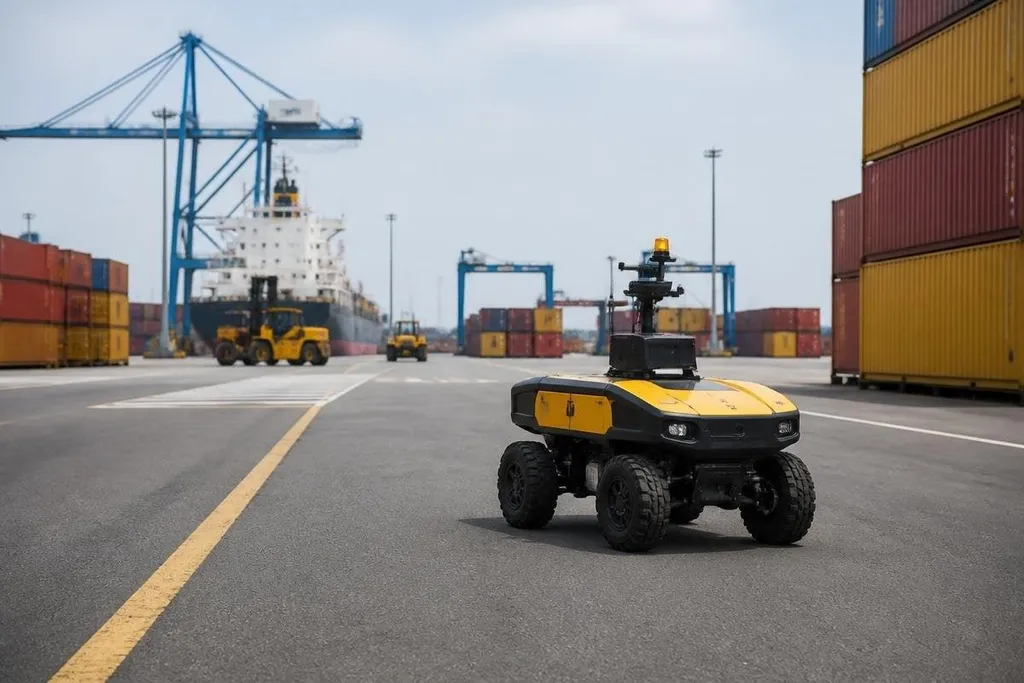
Port robots can move containers, inspect equipment, carry supplies, and guide vehicles through repeat routes. Their value depends on the work around them: clear traffic rules, reliable maps, trained staff, and a safe way to take control when conditions change.
Quick read
- Robots suit repeat trips and inspection routes with clear boundaries.
- Salt, rain, poor visibility, mixed traffic, and changing cargo can stop a plan from working.
- The purchase price is only one part of the cost; support, safety checks, and fallback work matter too.
Where port robots can help
Ports contain many tasks with the same steps repeated across a shift. A mobile robot may carry tools between a workshop and a quay, move a small load through a marked route, or inspect fences and equipment with cameras.
That repeat pattern gives the robot a clear job. A navigation system uses sensors such as LiDAR, which measures distance with laser pulses, to build a map and avoid objects. Cameras can add images for checks that a person would otherwise make on foot.
The benefit comes from reducing unnecessary travel and keeping routine checks on a set schedule.
It does not mean people disappear from the process. Staff still need to load some robots, check warnings, manage exceptions, and repair the system.
Larger port vehicles face a different task. An automated truck must read its route, follow speed limits, stop near people and other vehicles, and place a container in the correct area. Each step needs clear rules because a mistake can block traffic or damage cargo.
The risks start with the environment
Ports are a hard place for sensors. Rain can reduce camera quality, spray can cover lenses, and bright glare can change what a camera sees. Salt air can also affect exposed metal, seals, and electrical connections over time.
Maps can become stale too. A parked trailer, a closed lane, or a stack moved overnight can change the route the robot expects. The system needs a way to detect that change and stop safely instead of trusting an old map.
Mixed traffic adds another problem. Port roads may include human-driven trucks, cranes, maintenance vehicles, bicycles, and people on foot. A robot that works well on a marked route may need more checks before it shares space with vehicles that do not follow its rules.
Cybersecurity belongs in the same safety plan. A connected robot may receive routes, software updates, or task data through a network. Operators need access controls, update checks, logs, and a manual fallback when the network or control system fails.
A port robot’s price claim needs the machine, terminal, task, and test date beside it. Port operators can use Robot24.com to check those details in reports before weighing the wider cost of staff, software, maintenance, and downtime.
The cost is wider than the robot
For a port operator, the whole system belongs in the budget. That includes site surveys, changes to roads or signs, charging equipment, network coverage, staff training, software support, spare parts, and safety work.
The robot also needs a clear job boundary. A route with fixed pickup points may suit automation sooner than work that involves damaged cargo, blocked lanes, or many unexpected handoffs. Each exception adds a person, a delay, or a new software rule.
I’d use port robots first on repeat routes where a person can reach the robot quickly and the traffic rules are easy to explain.
That choice limits the risk while giving the operator a useful test. It also shows which parts of the process need better maps, different sensors, or changes to the work area before a larger rollout.
A buying checklist
Use these checks before choosing a port robot:
- Name the task: Write down the load, route, shift pattern, and handoff points.
- Map the hazards: Record people, vehicles, water, glare, slopes, radio gaps, and moving obstacles.
- Set the stop rule: Decide when the robot must stop and who can take control.
- Price the support: Add training, repairs, software work, charging, network changes, and spare parts.
- Test the exceptions: Include blocked routes, missed loads, sensor dirt, low battery, and lost connection.
- Set a result: Measure completed trips, stopped tasks, human interventions, and time lost during recovery.
A port robot earns its place when the task is repeatable, the work area is prepared, and people can recover failures without entering danger. The open question for each project is narrow: how many routine jobs can the system complete before its exceptions cost more than the time it saves?